

Developing

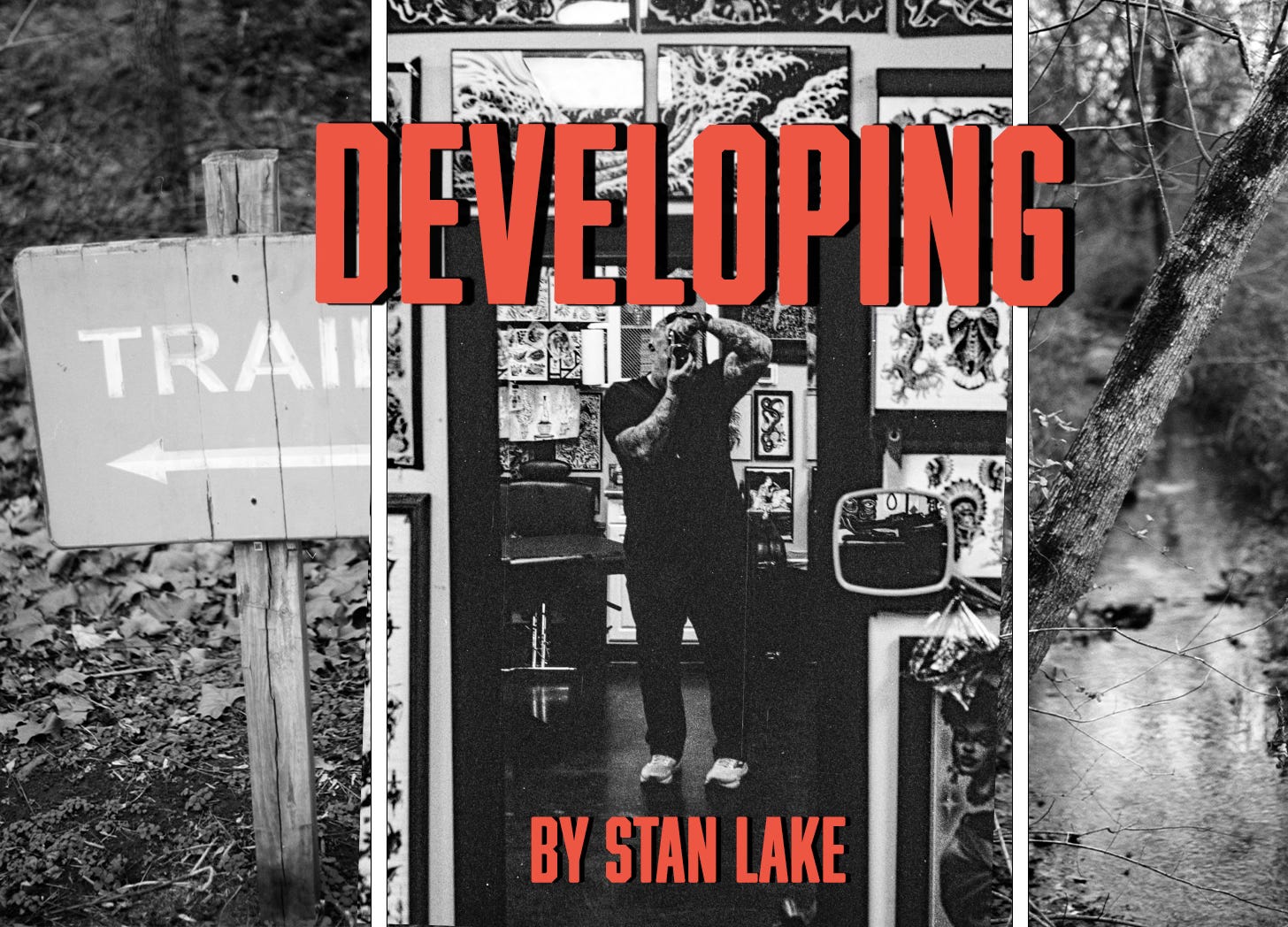
I’ve been a photographer for a few decades. My love affair with photography began in high school. It started with my first Canon Rebel series 35mm camera and Kodak disposable cameras. I cut my teeth on that entry-level film camera and simple point-and-shoots. I loved being able to take my ideas and see them in print. Each visit to our local Winn-Dixie’s one-hour photo lab filled me with joyful anticipation. There was just something magical about film development.
Back then, there weren’t colorful LCD screens on the back of the camera that let you know if you were exposed properly or even in focus. Photography was one part magic and one part mystery. It was a bonus when our local film developer took interest in some shots I’d taken. I glowed with pride when I saw 8x10 images I’d shot of bears and other animals from the Ashboro zoo hanging behind the counter. They were on full display for all the patrons of the photo lab. Seeing others feel joy from photos I took hooked me.
I’ve taken printable images with everything from pinhole cameras and disposable 35mm to modern mirrorless digital cameras. I love shooting photos. It’s never lost its luster for me. Still, despite having an expensive Sony digital camera, I’ve found myself shooting more with my iPhone in recent years. It’s more accessible, and there’s almost no setup required. The joy of shooting hasn’t diminished, but I miss the process before technology made everything easier. I missed the challenge of shooting on film.
So, when I saw an old clunky Pentax K1000 sitting on the shelf of a store in downtown Winston-Salem, I grabbed it. Just holding the heavy metal camera felt right in my hands. The camera came with a single 50mm lens and was completely manual. The only marginally modern amenity was a crude light meter powered by a watch battery.
With each press of the shutter, I felt and heard a clunk as the mirror flipped to expose the film. Then, I had to advance the film with a little lever on the back of the camera to take the next shot. It was slow and deliberate. I needed that. This relic from the mid-1970s forced me to see the world again. It made me pay attention to small details and dial in parameters to bring a photo into some semblance of focus. I loved that it was a challenge, and when I dropped off the film at the developer, I waited with anticipation to see if any of the images turned out.
Thankfully, the same store where I purchased the camera and film also offered developing and digital scanning. We dropped the film off over the weekend, and in a little under a week, I received an email that my film was ready. I was elated when I clicked the link to see my scanned photos. I was surprised to see that more of them turned out than I anticipated. Especially because I likely shot the first handful of photographs before realizing this camera had a built-in light meter.
I was learning new things about the camera between YouTube videos and hands-on learning throughout the entire roll of film. To see photos that looked halfway decent made me feel like this purchase wasn’t in vain. The thing I enjoyed the most was the process. Even if all the images had been horrible, I had a good time shooting. From manually loading and unloading film to shooting each photograph and later getting it developed, it took deliberate action. Nothing happened quickly. My gratification was delayed, and the result brought actual joy.
The other beauty of shooting on film is that the rigors of polished perfection that I usually strive for in digital imaging don’t seem to exist. Is a photo a little out of focus? Are the background highlights too hot? Who cares! In the end, even photos that weren’t “perfect” still felt good, and it felt like art. That alone takes the pressure off creation and allows me to exist in a creative space, without worrying about the outcome.
Since I couldn’t review my images immediately, my perfectionism didn’t cripple my experience. I snapped, hoped it worked, and moved on to the next thing that caught my eye. I was in the moment for once. I only had 24-36 shots to take, depending on the roll of film, so why waste them? By the time I got the photographs back from the developer, I was just surprised to see anything remotely passable. The entire experience brought back those same feelings that made me fall in love with photography so many years ago. Mostly, it felt good to be bad at something again and spend time re-learning things that technology has made all too easy for me.
If you’d like to see a gallery of a few from that first batch click HERE
Lastly, I was honored to find out that my book “A Toad in a Glass Jar” was selected as a part of Garden and Gun Magazine’s “Favorite Books of 2025” and to say I was blown away would be an understatement. What a wild year it’s been! Thanks for being a part of it.

I read this with a smile on my face. We have forgotten the joy of the process.
The new things we learn by going through the process whether it is photography, mastering a new recipe or crocheting a blanket that will bring warmth & comfort. Sometimes going through the process is more fulfilling than the end result!!!
The
That Pentax K1000 is a workhorse, built like a tank and basically forces you to think before every shot. The delayed gratification angle really nails what's missing from instant digital review loops. When I shot film regularly, the gap between taking a photo and seeing the result created this necessary distance that let me seperate the act of shooting from evaluating what worked. Now with digital, that instant feedback loop can be paralyzing, constantly second-guessing instead of just moving forward. The imperfect-but-good-enough aesthetic of film is freeing too, takes away the temptation to pixel peep evrything into oblivion.